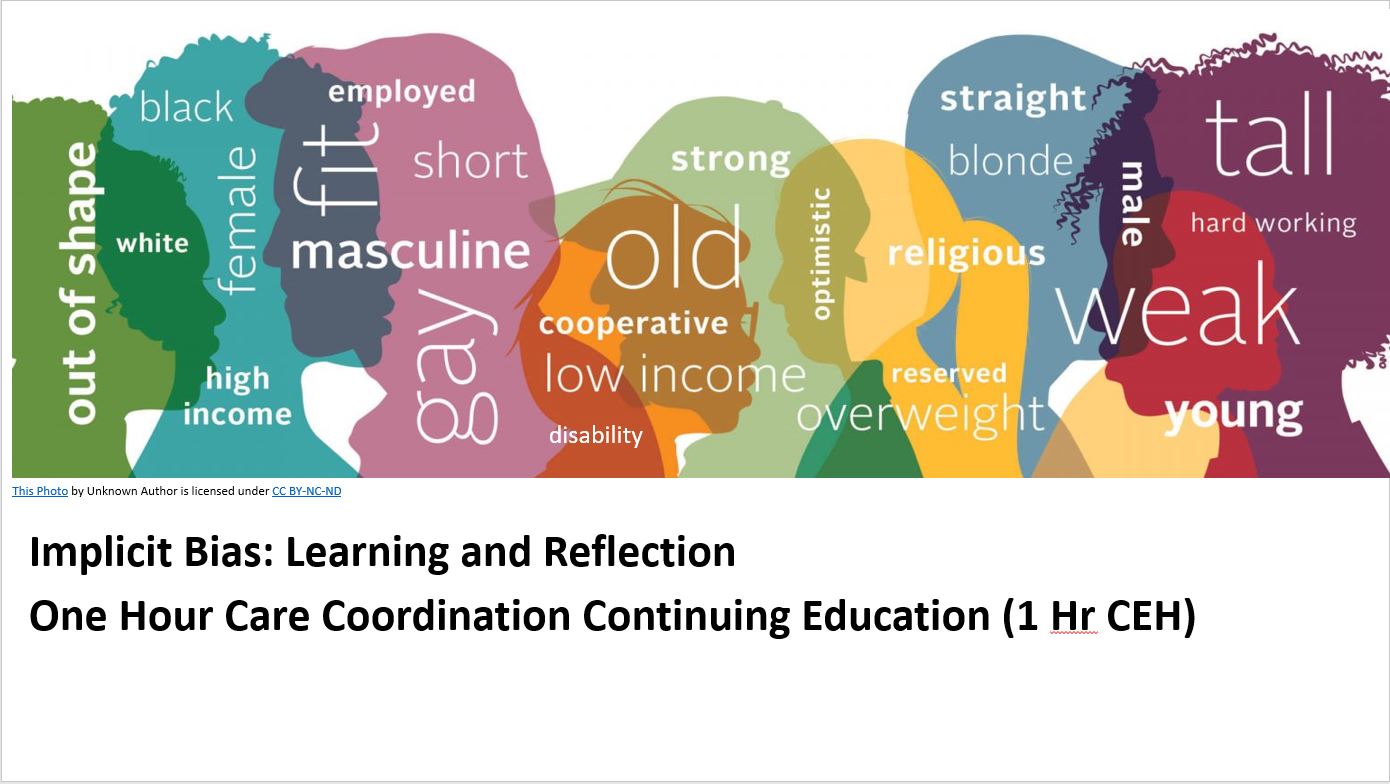
Implicit Bias: Implicit bias is a form of bias that occurs automatically and unintentionally, that nevertheless affects judgments, decisions, and behaviors. https://diversity.nih.gov/sociocultural-factors/implicit-bias
This course offers care coordinators one hour CEH.
Although implicit bias affects everyone, it's important to know about it so we can move towards equitable professional relationships with the people and families we serve.
You will take 2 implicit bias tests on the Harvard University Project Implicit website. These tests are completely confidential. SDS does not receive any results of your tests or any information from the testing website. They each take about 10-15 minutes to complete. Then you will answer 2 self-reflective questions in the Academy course. You are NOT required to report the results of your bias tests.
Harvard's Project Implicit tests are free, confidential, publicly available, do not gather personal data, and are widely used in training for the social services, education, law enforcement, and health care science fields.
Care Coordinators seeking Continuing Education Hours, finishing this course will give you a certificate worth one hour of Care Coordination CEH.
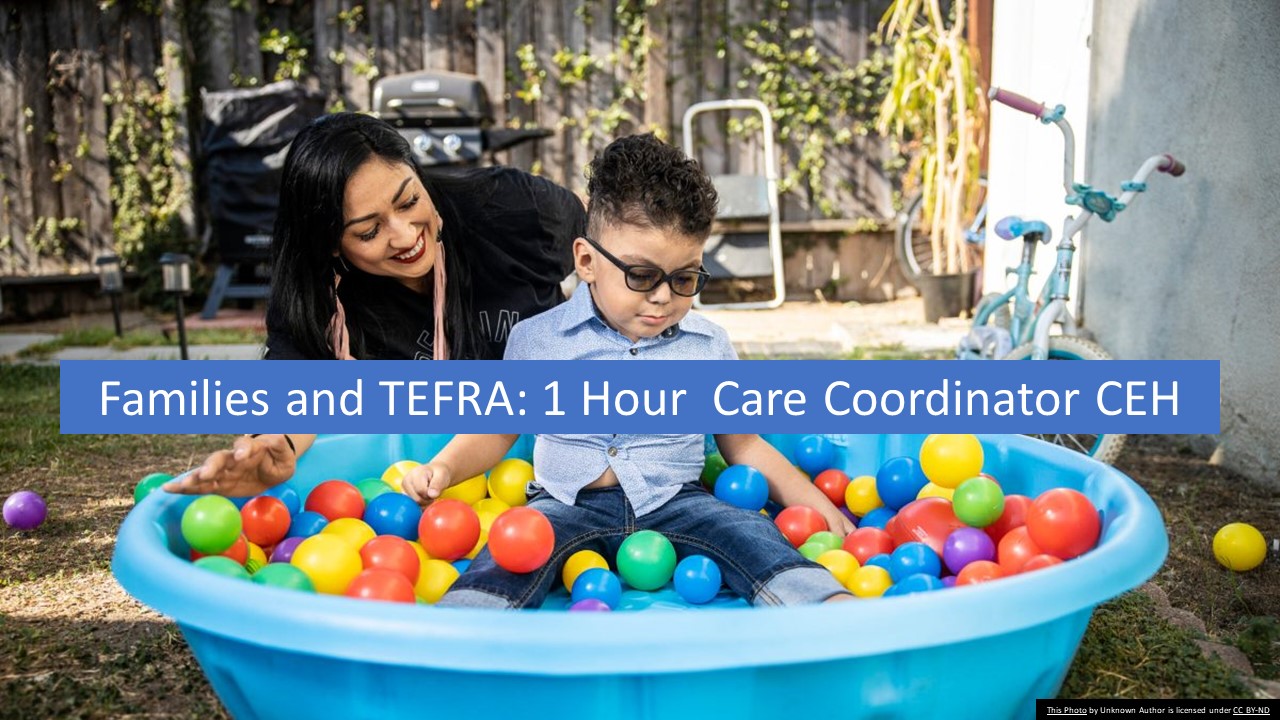
This is a Project ECHO video of a presentation for individuals and families about TEFRA. Briefly, TEFRA is Medicaid eligibility for children who experience disability and meet level of care such as that provided in a facility. The child can qualify for Medicaid, outside the income limits of the family/parents/guardian.
This video walks families through the details of eligibility and application for TEFRA. Presented by Project ECHO 12/22/22.
TEFRA requires a care coordinator. This video DOES NOT equal formal training in being a TEFRA care coordinator.
When you complete this course, you should:
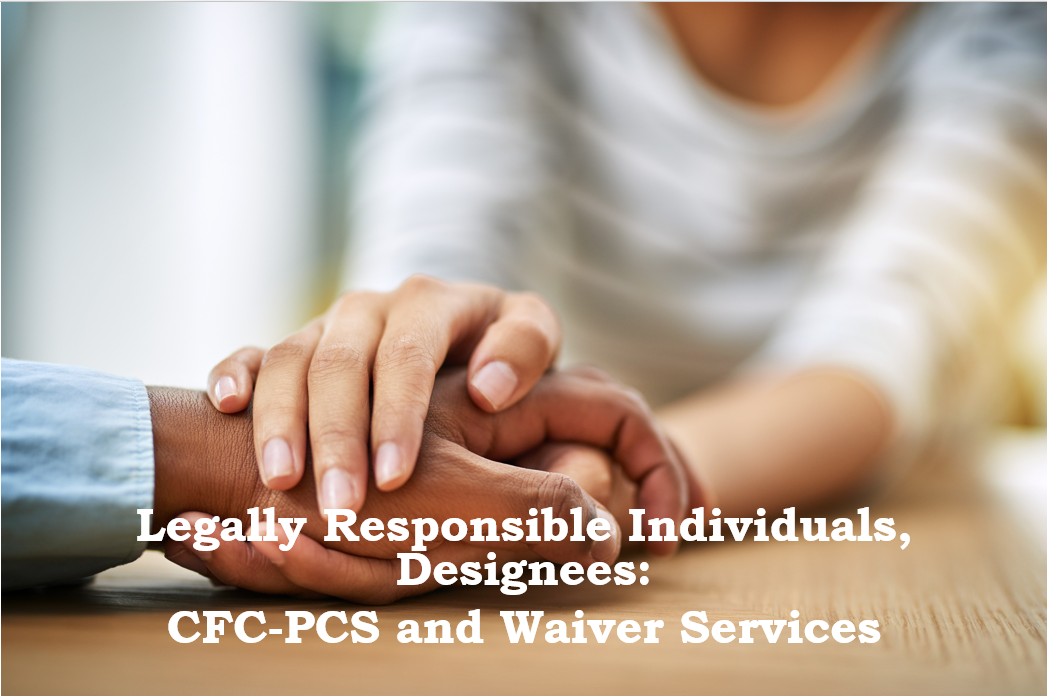
Be able to define what a legally responsible individual is and is not
Recognize which services can be provided by the LRI
For CFC-PCS and PCS: State one reason why a designee is required
State 2 responsibilities of a designee
Topics will be announced.
Certified Care Coordinators can earn a certificate that counts for one hour Care Coordination CEH.
How to get your CEH:
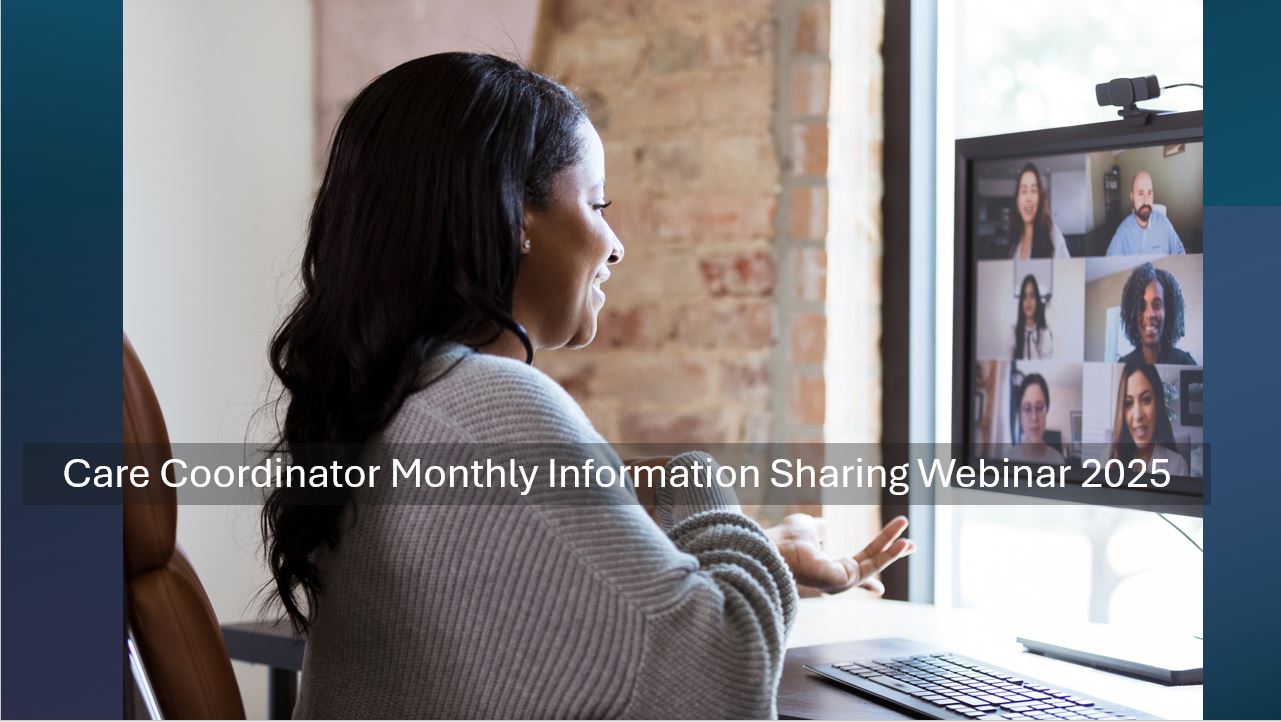
Attend the Zoom session. We'll feature a question and answer during the session.
Log in to your learner profile in the Academy, and provide the answer we gave in the session. You can then download a certificate for that session one hour CEH, and you will receive one by email immediately.
This course is good for Employment Services program administrators, program administrators of any other Habilitation service for the Home and Community Based Waiver, certified Care Coordinators, DVR staff, and SDS staff. Care Coordinators and Licensed Assisted Living Home admins can earn 3 hours regulation-compliant training credit.
Learning Objectives
Upon completing this course, participants will be able to:
1. Define Waiver Employment Services
2. Define DVR and its relationship to Waiver Employment Services
3. Identify main points of transition from DVR to Employment Services
4. Recognize eligibility for Employment Services
5. Tell the difference between Pre-Employment Services and Employment Services
6. State 2 important regulatory points in history that informed modern Employment Services
7. Identify 2 ways Employment is important to people of work age with IDD
8. State 2 concepts from the core principles of Employment Services
9. Identify the 3 roles for staff delivering Employment Services
10. Identify training resources for learning within each role